

For private-label sourcing, category breadth matters most when each garment is specified on its own material, construction, size, branding, and application requirements rather than treated as one generic medical-uniform program. Managing distinct specifications allows healthcare networks and distributors to align each product segment with precise clinical needs while consolidating production oversight.
Which Categories Define the Portfolio of a Medical Uniform Manufacturer from China?
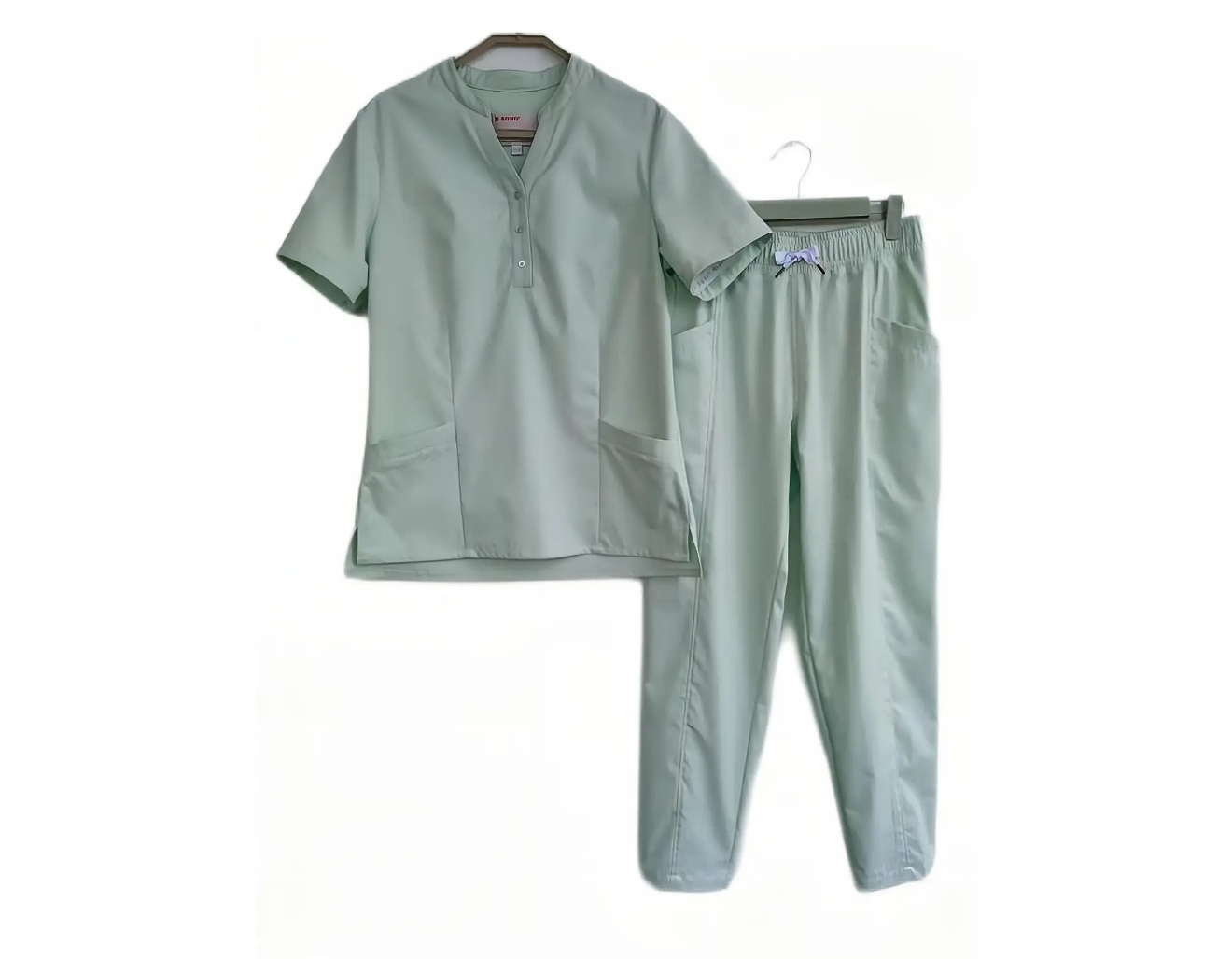
The manufacturing scope at E-SONG APPAREL covers scrub sets, nurse-oriented medical garments, a white long lab coat, and a washable surgical gown within its product universe. That breadth lets buyers build a sourcing program across everyday clinical apparel and more specialized garment formats. This avoids the need to start from a single scrub SKU or piece together multiple factory networks.
Scrub products span V-neck, Mandarin-collar, jogger, cargo, flare-leg, and other configurations. Simultaneously, the lab coat and washable surgical gown create separate specification paths for coat construction and barrier-garment requirements, ensuring that each clinical role receives the correct garment format.
How Do Fabric Families Change Medical Uniform Sourcing?
Fabric selection changes stretch, structure, care behavior, garment weight, and the silhouettes that can be developed. E-SONG APPAREL offers four medical-uniform fabric families. They include 65% polyester and 35% cotton in woven and knitted constructions, with more than 15 running colors. A 90% polyester and 10% spandex, 140gsm option provides 4-way stretch, breathability, quick drying, and more than 15 running colors. A 55% cotton, 42% polyester, and 3% spandex option provides 2-way stretch and a soft touch. The 72% polyester, 21% rayon, and 7% spandex option is 175–205gsm, 4-way stretch, wrinkle resistant, antimicrobial, anti-static, and available in more than 15 running colors.
A buyer developing a coordinated range can use stretch blends for fitted or mobility-oriented scrubs while keeping more structured woven options for garments that need a different hand and silhouette. This material flexibility prevents the compromise of forcing a single fabric across entirely different garment categories.
The fiber blend should remain tied to the selected garment and end-use brief. This is because the fabric properties of one scrub or coat do not automatically transfer to the entire medical-uniform range. Specifying the exact composition and weight for each style ensures that the finished product meets the durability and comfort expectations of the end user.
How Should Buyers Compare Scrubs, Lab Coats and Surgical Gowns?
The three categories solve different uniform-program needs, so the useful comparison starts with garment function, construction, material, and required documentation rather than a single fabric preference. A structured approach to specification prevents category confusion during the sample and quotation phases.
Scrubs Support the Broadest Fit and Style Range
Scrubs offer the widest assortment of stretch fabrics, necklines, pant cuts, colors, and private-label design options, making them the most flexible category for differentiated healthcare-uniform collections. This variation allows brands to target different demographics, from traditional healthcare settings to modern aesthetic clinics.
Lab Coats Use a More Defined Coat Construction
The white long lab coat uses 65% polyester and 35% cotton Ultra Twill with a snap-front closure, unisex fit, and back vent. This gives sourcing teams a concrete construction baseline for sample evaluation and ensures the garment provides the required coverage and professional structure.
Washable Surgical Gowns Require Application-Specific Specification
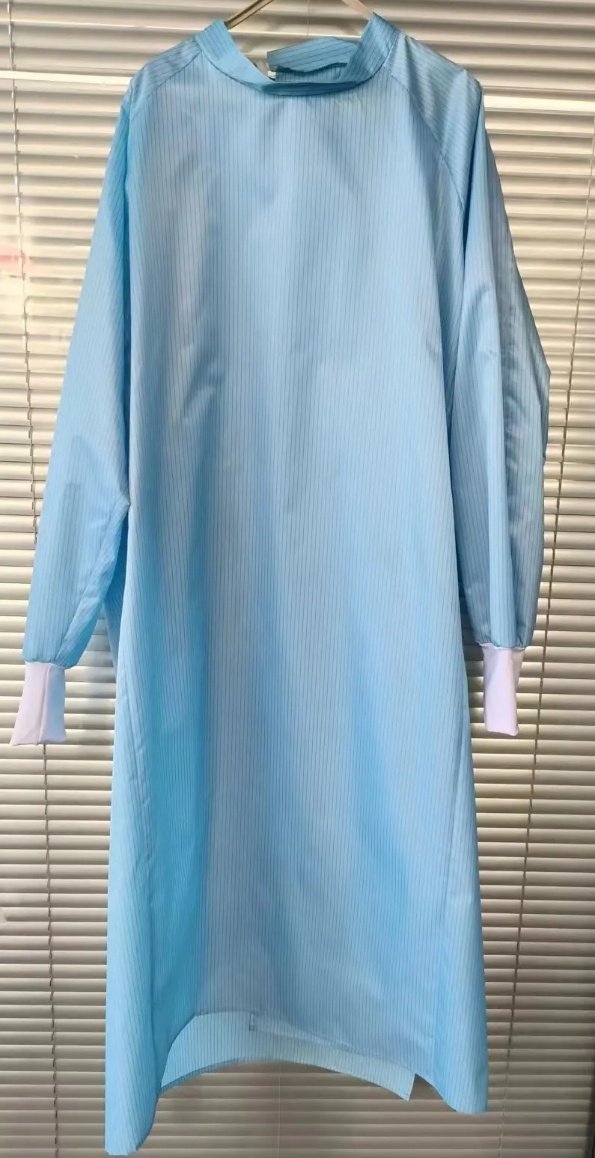
The washable surgical gown carries AAMI PB70 Level 1 and Level 3 specifications, one-size construction, machine-care instructions, and material testing across more than 150 sterilized washing cycles. Regulated barrier programs should place the required standard, protection level, test scope, and acceptance criteria directly in the procurement specification to align with facility compliance protocols.
What Manufacturing Capacity Supports Multi-Category Orders?
A multi-category medical-uniform program depends on production capacity as well as assortment breadth. E-SONG APPAREL operates an owned Linyi factory with 120 workers and also uses subcontracted production lines. Monthly production capacity is 200,000 units.
Different uniform styles can be allocated across different production lines, helping buyers plan mixed programs. E-SONG APPAREL uses a pre-production meeting, inline inspection, and final inspection as its quality-control sequence. Customers may also arrange a third-party final inspection at the factory.
Before bulk ordering, buyers can request fabric swatches and a development sample. The development-sample fee is USD 100 per set and can be credited against the bulk order. For faster remote review, E-SONG APPAREL can also provide product photos and videos. Production delivery remains planned around the selected order terms.
What Should a Medical Uniform RFQ Include?
A useful RFQ converts product breadth into a precise garment program. The buyer should specify each garment family separately so material, fit, branding, quantity, and application requirements remain clear at the sampling and quotation stage.
A complete medical-uniform brief should capture the following fields at the same decision level. The supplier can translate the buyer’s category plan into comparable samples, accurate quotations, and clear production instructions.
· Garment category and intended professional use.
· Fabric composition, weight, stretch level, and finish requirements.
· Top, coat, gown, and pant construction details.
· Size range, color range, and gender or unisex fit requirements.
· Logo method, label, packaging, and private-label details.
· Quantity by style and color. When E-SONG APPAREL fabric is used, the MOQ is 300 pieces per style per color.
· Required standards or test criteria for regulated garment applications.
The completed brief gives the manufacturer one coherent specification for sampling, costing, production planning, and final order discussion.
Medical Uniform Manufacturer FAQs
These questions help sourcing teams move from a broad product range to a specification that can be sampled and quoted accurately.
Which Medical Uniform Categories Can E-SONG APPAREL Produce?
The range includes medical scrub sets and separates, nurse-uniform styles, a long unisex lab coat, and a washable surgical gown, alongside custom medical-uniform development for specific private-label needs.
Which Medical Uniform Fabrics Are Available?
Medical-uniform fabrics include four main blend families. One is 65% polyester and 35% cotton. Another is 90% polyester and 10% spandex at 140gsm. A third is 55% cotton, 42% polyester, and 3% spandex. The fourth is 72% polyester, 21% rayon, and 7% spandex at 175–205gsm. Stretch, care, and finish properties differ by blend.
What Sample Options Are Available Before a Bulk Order?
Buyers can request fabric swatches and a development sample before bulk production. The sample fee is USD 100 per set and can be credited against the bulk order. E-SONG APPAREL can also send photos and videos for a faster digital quality review.
Can Medical Uniforms Be Customized for Private Labels?
Yes. E-SONG APPAREL provides OEM and ODM support through its own design department. Buyers can send a desired style even without an in-house designer. Branding can use heat-transfer or embroidery logos, plus customized tags and packing cartons.
What Should Buyers Specify for Regulated Garment Applications?
The RFQ should state the required standard, protection level, test method, garment construction, care cycle, and acceptance criteria so the selected product can be assessed precisely against the intended application.
Build a Multi-Category Medical Uniform Program
Buyers sourcing scrubs, lab coats, and surgical gowns can reduce development friction by locking the category, fabric, construction, branding, quantity, and application requirements before sampling. A clear specification ensures that every garment in a mixed portfolio meets its distinct functional and commercial targets.
Send that comprehensive specification to https://www.e-songuniforms.com/ to align the selected medical-uniform categories with sample development, accurate quotation, and reliable production planning.
Post time: Sep-08-2026